Happy New Year! I hope you have had time this past week to refresh and reflect on cherished memories and new beginnings. The new year always symbolizes renewal, and at Dairy Council of California we are kicking off 2026 with fresh ideas and a focus on nutrition and health. From the release of the new Dietary Guidelines for Americans to Dairy Council of CA’s publication of the 2026 Trends for Education and Health Professionals, let’s dive into what’s new for nutrition and dairy.
First, the 2025-2030 Dietary Guidelines was released with a key takeaway: Eat real food. Our first look at how these new recommendations may impact dairy and overall eating patterns is below. There is also an opportunity to weigh in on the available dairy options and alternative beverages in the new California Special Supplemental Nutrition Program for Women, Infants, and Children (WIC) food package rule. Then take a closer look and see what trends are shaping the current food and nutrition environments. We close out with the latest evidence-based updates to keep you informed.
What trend or guideline do you think will have the biggest impact this year?
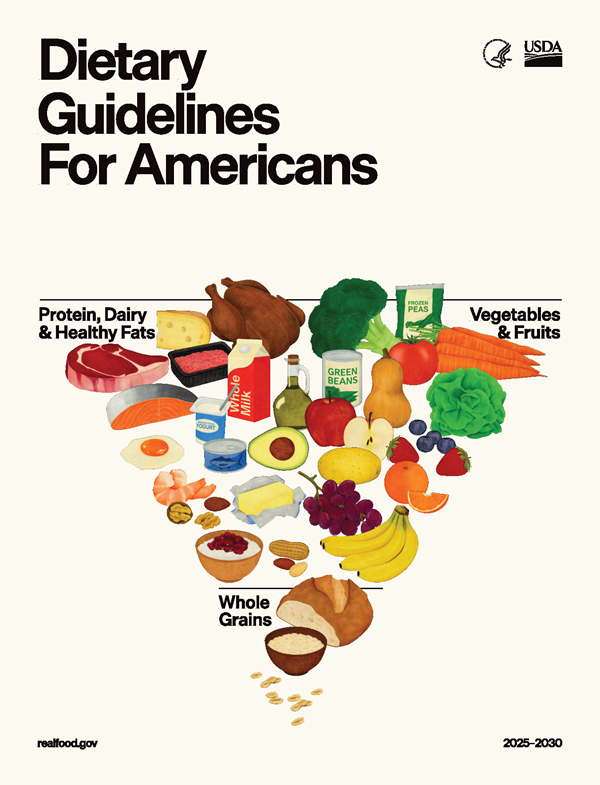 On Wednesday, January 7, 2026, U.S. Department of Health and Human Services and U.S. Department of Agriculture jointly released the 2025-2030 Dietary Guidelines along with a new website. These guidelines serve as the foundation for federal food, nutrition and health policies and inform state and local public health initiatives. The new guidelines emphasize an “eat real food” message, encouraging dietary patterns built around protein, dairy, vegetables, fruits, healthy fats and whole grains, alongside a reduction in highly processed foods. Below are key implications in the guidelines for dairy foods:
Dairy Council of CA will continue to review the Dietary Guidelines and determine opportunities to advance dairy education with key audiences. We will keep the dairy community updated as we monitor the release of these guidelines and their impacts on food and nutrition program guidelines and nutrition education.
On December 23, 2025, the California Department of Public Health (CDPH) announced a proposal to amend the California WIC Authorized Food List. The proposed amendments would impact dairy and dairy alternative options available for participants. Following are key highlights of the proposed amendments:
CDPH is in the process of collecting input from stakeholders on the proposed changes. Dairy Council of CA will be submitting written comments reinforcing the role of milk and dairy foods in WIC, contributing to optimal health and well-being for both children and mothers. Read the public comments here. If members of the dairy community would like to share their input, written comments can be sent electronically, with “Regulatory Alert 2025-01” in the subject line, to the following email address: WICRegulations@cdph.ca.gov. The comment period will close at 11:59 p.m. PST on January 14, 2026.
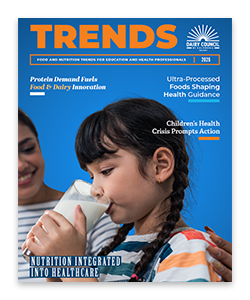 Dairy Council of CA released its 2026 Trends for Education and Health Professionals publication, a report that examines influential food and nutrition trends shaping education, health and communities today. The 2026 Trends publication focuses on four key areas shaping the future of food and nutrition:
The new Trends publication, including a series of short companion videos, is available online at DairyCouncilofCA.org/Trends.
 National Milk Day marks the first home deliveries of milk in sterilized glass bottles—a milestone that advanced food safety and helped establish milk as a trusted, affordable source of nourishment for families. Today, it’s also a moment to recognize milk’s essential role in supporting nutrition and health across life stages.
This week in our newsroom, I share perspective alongside California Secretary of Food and Agriculture Karen Ross on why milk safety and nutrition remain important to celebrate, with links to trusted CDFA resources that explain how milk is safeguarded from farm to glass. Read the press release here.
We’re also partnering with 16 Mother’s Nutrition Centers across Southern California to celebrate National Milk Day, highlighting how milk and dairy support pregnant women, new mothers, infants, and young children.
Join me in recognizing National Milk Day through the Cheers Challenge and exploring additional campaign resources for health professionals and education leaders. Learn more here.
If you have questions, concerns or feedback you would like to share, please do not hesitate to reach out.
Best regards,
Amy DeLisio, CEO
Dairy Council of California