Top 2026 food and nutrition trends for education and health professionals.
Dairy Council of California is a trusted nutrition organization committed to elevating the health of children and communities. Through education, advocacy and multisector collaboration, the organization promotes lifelong healthy eating patterns and advances the role of milk and dairy foods in improving nutrition security and supporting sustainable food systems. With more than a century of experience, Dairy Council of CA continues to lead with evidence-based nutrition science, education and strategic partnerships to build healthier communities.
Dairy Council of CA would like to thank and acknowledge Debbie S. Fetter, PhD, for providing a comprehensive third-party review of the 2026 Trends publication.
Authors:
Trends Advisory Committee Members:
Janice Carter
Your Opinion Matters: 2026 Trends Survey
Thank you for reading Dairy Council of California's 2026 Trends. We appreciate your time to share your thoughts about the publication. Please take a few minutes to complete this short online survey.
Complete the survey here.
Watch a short summary of each trend
Jump Ahead
 Foreword: Building a Stronger Food and Nutrition Future: Current Challenges and Opportunities
The United States has long maintained a strong food and nutrition infrastructure, but multiple factors have put a strain on those systems, impacting millions of families, farmers and retailers. Cuts to food assistance and nutrition education programs, a shrinking agricultural workforce and global trade tensions have disrupted the food and nutrition system, contributing to economic uncertainty.
The 43-day federal government shutdown that started on October 1, 2025, interrupted federal nutrition programs, which taxed the charitable food system, especially food banks, and created instability for households vulnerable to food insecurity. Recent policy shifts have further destabilized the food and nutrition safety net. For example, stricter Supplemental Nutrition Assistance Program (SNAP) eligibility requirements expanded the age range for work mandates and capped food benefit increases, thus restricting access to crucial resources.1
Concurrently, the elimination of federal funding for SNAP-Ed, the nation’s most comprehensive nutrition education program with regard to reach and scope, removes critical education and support for skills like shopping on a budget, gardening, cooking, meal planning and creating healthier school and community environments.2 CalFresh Healthy Living, which is California’s SNAP-Ed program, reached 1.8 million adults, adolescents and children through its programs just in 2024, highlighting the potential impact of this funding loss.3 Furthermore, the cancellation of the Economic Research Service Household Food Security reports, key tools for tracking hunger in the U.S., combined with the rollback of programs connecting schools and food banks to local foods, add to these infrastructure challenges.4,5
Opportunities for Action
In contrast to these policy setbacks, the Make Our Children Healthy Again Strategy Report outlines a call to action to end childhood chronic diseases.6 The report has four pillars: advancing research, realigning incentives, fostering private sector collaboration and increasing public awareness. Each offers recommendations to strengthen nutrition education, safeguard equitable food access and improve health across the life span.
For the first time, as of January 2026, 18 states will pilot restrictions on SNAP purchases primarily focused on sugar-sweetened beverages and candy, intending to influence consumer behavior and improve food choices. However, these restrictions raise critical questions about the importance of participant autonomy and if limitations alone correlate to improved nutrition outcomes.7,8 These approved SNAP Food Restriction Waivers may lead to promising and nuanced results and could inform future policies.
Now is a pivotal opportunity for health professionals and educators to champion evidence-based policies and drive systemic change that meets the needs of all communities. The 2026 Trends publication explores emerging food and nutrition trends,
analyzes their implications and presents actionable strategies to empower professionals to shape the future of nutrition.

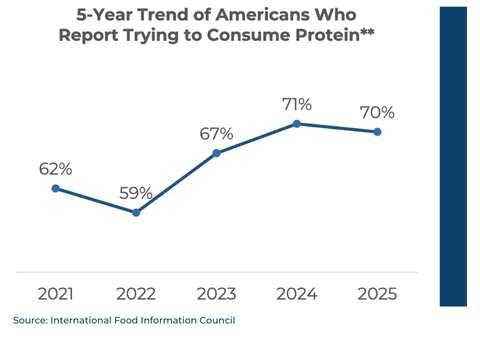 Consumer
demand for protein remains high, driven by goals such as improved strength/muscle health, healthy aging and overall well-being. According to the International Food Information Council’s 2025 Food and Health Survey, 70% of Americans are actively
seeking out protein foods, and a high-protein diet was the most common diet in the past year.9 Despite this increased interest in protein, most people surveyed did not actually know how much protein they should
consume daily, with more than half saying it should be 50 grams or less.
Consumer
demand for protein remains high, driven by goals such as improved strength/muscle health, healthy aging and overall well-being. According to the International Food Information Council’s 2025 Food and Health Survey, 70% of Americans are actively
seeking out protein foods, and a high-protein diet was the most common diet in the past year.9 Despite this increased interest in protein, most people surveyed did not actually know how much protein they should
consume daily, with more than half saying it should be 50 grams or less.
The rise in GLP-1 weight loss medications is also fueling protein interest. These medications, now used by roughly 12% of Americans (26.5% in adults with diagnosed type 2 diabetes), suppress appetite.10 Thus it is essential for users to prioritize hydration, fiber-rich foods and protein to maintain adequate nutrient intake and prevent muscle loss, which is a serious concern linked to these medications.11 Although the importance of nutrition has been recognized with the use of GLP-1 medications, there is a lack of evidence in the literature about specific dietary recommendations.
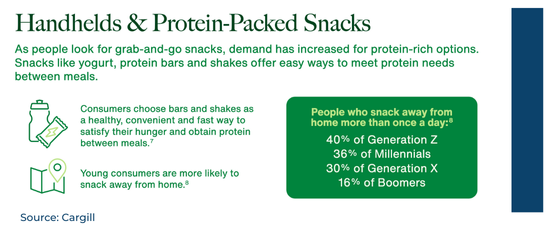 Based
on consumer polls, interest in protein spans across age groups, and consumers are seeking protein for both meals and snacks. Parents of children and teens report looking for protein-rich snacks and are willing to pay more for products labeled “good
source of protein.”12,13 Among teens, protein supplements like bars, shakes and powders are popular tools to support sports performance and muscle building.
14
Based
on consumer polls, interest in protein spans across age groups, and consumers are seeking protein for both meals and snacks. Parents of children and teens report looking for protein-rich snacks and are willing to pay more for products labeled “good
source of protein.”12,13 Among teens, protein supplements like bars, shakes and powders are popular tools to support sports performance and muscle building.
14
Widespread demand for protein is leading brands across the food and beverage industries to respond with new products and formulations. 15,16 Protein can be found in everything from pastas, breads, chocolate bars and snack foods to pre-made comfort foods such as rice-based dishes and soups. 17 According to market research, the high-protein product market is expected to grow by $50.2 billion from 2023 to 2028, partly fueled by incorporating whey protein into various foods and beverages, as well as using alternatives such as collagen, soy and pea proteins.18
Dairy’s Role in Shaping High-Protein Innovation
With rising demand for protein transforming the food industry, dairy is positioned as a leading sector. To support this growth, the U.S. dairy industry is increasing its processing capacity, particularly for milk powders and whey protein powder.19 New dairy products fortified with functional ingredients are being tailored to specific health needs, including a dairy-based drink designed to support people taking GLP-1 weight loss medications, as well as supplement shots made of kefir and colostrum, which are ingredients known for their functional health benefits.20,21
 Dairy
proteins rank among the highest in terms of protein quality and digestibility, making them a great source for growing and repairing muscle tissues.22 Beyond high-quality protein, dairy foods offer 12 essential
nutrients, including potassium and vitamin B12, within a unique structure that provides functional health benefits beyond individual nutrients.23 Dairy protein across traditional products such as milk, cheese
and yogurt and innovative dairy solutions designed to optimize protein content reflect a commitment to meeting consumers’ diverse needs, preferences and values.
Dairy
proteins rank among the highest in terms of protein quality and digestibility, making them a great source for growing and repairing muscle tissues.22 Beyond high-quality protein, dairy foods offer 12 essential
nutrients, including potassium and vitamin B12, within a unique structure that provides functional health benefits beyond individual nutrients.23 Dairy protein across traditional products such as milk, cheese
and yogurt and innovative dairy solutions designed to optimize protein content reflect a commitment to meeting consumers’ diverse needs, preferences and values.
Implications for Education and Health Professionals


 Ultra-processed
foods are a key focus of global nutrition research and policy and have become central to consumer concern, government action and industry response, even as a definition is debated. The most common definition used for understanding ultra-processed
foods is based on the NOVA food classification system developed by researchers at the University of São Paulo, Brazil, which categorizes foods based on processing level. The NOVA system is acknowledged for its oversimplification, as it doesn’t
account for nutritional composition or the food matrix, or the fact that certain processing methods can have neutral or even positive effects on health outcomes.24 For example, milk can undergo processing techniques
such as fermentation, but eating yogurt is linked with a range of health benefits, including a reduced risk for type 2 diabetes and less weight gain over time.25
Ultra-processed
foods are a key focus of global nutrition research and policy and have become central to consumer concern, government action and industry response, even as a definition is debated. The most common definition used for understanding ultra-processed
foods is based on the NOVA food classification system developed by researchers at the University of São Paulo, Brazil, which categorizes foods based on processing level. The NOVA system is acknowledged for its oversimplification, as it doesn’t
account for nutritional composition or the food matrix, or the fact that certain processing methods can have neutral or even positive effects on health outcomes.24 For example, milk can undergo processing techniques
such as fermentation, but eating yogurt is linked with a range of health benefits, including a reduced risk for type 2 diabetes and less weight gain over time.25
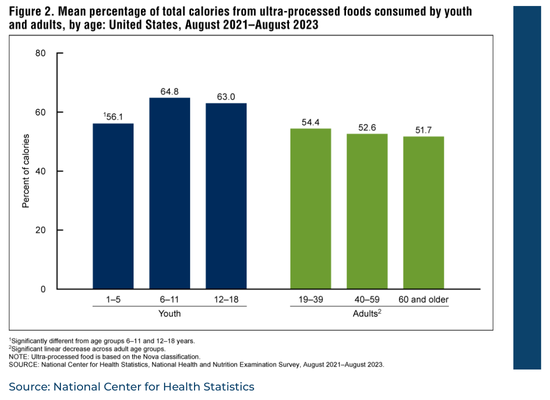
Despite limitations in classifications and evolving terminology, data from the National Health and Nutrition Examination Survey shows that over half of daily calories in the United States come from ultra-processed foods, with youth consuming more than adults and those in lower income groups consuming more than those with higher income.26 Dietary factors, particularly from ultra-processed foods, have been identified as more significant contributors in the obesity epidemic, as compared to a lack of physical activity.27 High consumption of ultra-processed foods has also been linked to disrupted neurocognitive development during childhood, impaired decision-making during adolescence and increased risk of mental health conditions in adulthood.28
 Policy and Ultra-Processed Foods Definition Momentum
Consumer confidence in the U.S. food supply is declining across all age demographics, coupled with increased concern about chemicals and additives in food.29 These concerns, alongside a growing health crisis, have contributed to the rapid emergence of movements to define and regulate ultra-processed foods at the international, federal and state levels. On the international stage, the World Health Organization is developing guidelines on the consumption of ultra-processed foods. 30 At the same time, the U.S. government is working to create a federal definition of ultra-processed foods to allow for consistency in research and policy.31 The 2025–2030 Dietary Guidelines for Americans is another key area to watch because how ultra-processed foods are addressed in the newest guidelines could impact federal nutrition programs.
At the state level, over 25 states have proposed actions related to food additives, signaling a growing trend of localized regulation and reflecting how concerns about ingredients are increasingly shaping conversations about ultra-processed foods.32 California is regarded as a leader in food policy and access.33 On Oct. 8, 2025, California Gov. Gavin Newsom signed AB 1264 into law.34 Building on previous legislation that banned specific dyes and chemicals, AB 1264 is a bi-partisan effort to phase out particularly harmful ultra-processed foods from California school meals by 2035.
To align with potential legislation, many food companies are already voluntarily reducing additives and dyes. The International Dairy Foods Association committed to eliminating certified artificial food dyes from dairy products sold in national school meal programs by July 2026,35 and partnered with U.S. ice cream members to pledge to remove these dyes from U.S. ice cream and frozen dairy desserts by 2028.36 Additionally, major food companies are reformulating products like cereal, chips and other snack foods to eliminate petroleum-based synthetic dyes and other artificial ingredients.37
Implications for Education and Health Professionals

 Children’s Health Crisis Spurs National Action
Children’s health is facing a growing crisis. In the United States, key indicators of children’s health have worsened, and racial disparities persist. Over the past 15 years, children’s health has declined across many areas, with rising rates of mortality, chronic conditions, sleep problems, early puberty, and physical and emotional symptoms.38
Currently, an estimated one in three teens has prediabetes.39 Excess body fat is a risk factor for type 2 diabetes, and rates of extremely severe obesity among U.S. children rose between 2008 and 2023, with the sharpest increases seen among older adolescents and Black children.40 Pandemic-related increases in obesity prevalence were observed for Black children and adolescents, but not for other racial and ethnic groups.41 According to a 2025 report from the United Nations Children’s Fund, obesity among school-age children and adolescents exceeded underweight globally for the first time in history.42
Addressing children’s health includes updated screening recommendations and medications. The American Academy of Pediatrics is recommending regular mental health screenings beginning at six months of age.43 Meanwhile, GLP-1 medications are being explored for use in children and adolescents as obesity rates rise. A 2019–2024 retrospective study found GLP-1 use increased from 12.3% to 60.9% within a sample of 696 pediatric patients with type 2 diabetes. 44 However, overall GLP-1 medication use remains low among children and young adults.45,46
To address the escalating urgency behind the children’s health crisis, the U.S. government and agencies are focusing on making national food programs healthier. The Make Our Children Healthy Again Strategy Report set forth recommendations intended to guide future efforts to improve child nutrition and well-being through stronger food policies, reduced ultra-processed foods and healthier food environments at school and home.6 One recommendation is to identify ways to strengthen the Expanded Food and Nutrition Education Program (EFNEP), a nutrition education program for people experiencing nutrition insecurity.
 Collaboration to Improve Children’s Health
Creative strategies and public-private partnerships are important to effectively address the health crisis. Several initiatives are expanding nutrition education and support in schools. For example, California’s Farm to School Incubator Grant Program has awarded $86.8 million since 2021, connecting students across the state with locally sourced foods, as well as expanding school gardens and increasing food and agricultural education.47 The California Foundation for Ag in the Classroom’s Literacy for Life Grants also provide California K-12 educators with funding to integrate agriculture into classrooms through projects like gardens, farm days and field trips.48
Beyond grants, the private sector is also engaged in programming. The California School-Based Health Alliance launched The Power of Peers, a curriculum designed to train students to provide peer-to-peer support in school-based health centers, wellness centers and schools, thus equipping staff with tools to cultivate impactful peer support initiatives.49 Danone North America is partnering with FoodCorps to build on a 2023 pilot that reached over 500,000 students with hands-on nutrition programs like cooking lessons, taste tests and school gardens.50 By honoring cultural food traditions and engaging youth as leaders, these models build trust, agency and community connection.
Implications for Education and Health Professionals
 Call-Out Box: Oral Health Is Overall Health
Oral health can often be overlooked, but poor dental health increases the risk and severity of chronic diseases, including diabetes and heart disease. Nutrition plays a vital role in maintaining oral health and preventing dental caries in children and adults. Nutrients such as calcium, vitamin D, phosphorus, protein and vitamins A and C support enamel formation, gum health and remineralization. Maintaining good dental health is an essential part of preventing and managing chronic diseases across the life span.51

 Food and Health Initiatives Expand as Nutrition Is Integrated into Health Care
Nutrition interventions are emerging as a critical component of health care across the life span. Food Is Medicine approaches focus on integrating food and nutrition interventions into clinical care to prevent, manage and treat chronic diseases. The U.S. Department of Health and Human Services established the Food Is Medicine initiative as a strategy to reduce chronic diseases and food insecurity.52 Key public-private partnerships support the initiative, including The Rockefeller Foundation, Food & Society at the Aspen Institute, Instacart and Feeding America.53
A systematic review of Food Is Medicine approaches found that produce prescriptions, food boxes and medically tailored meals positively influenced diet quality and food security.54 Many of the programs in the review included nutrition education from a nutrition professional; however, larger, higher quality randomized controlled trials with clear clinical outcomes are needed to better establish the effectiveness of these interventions.
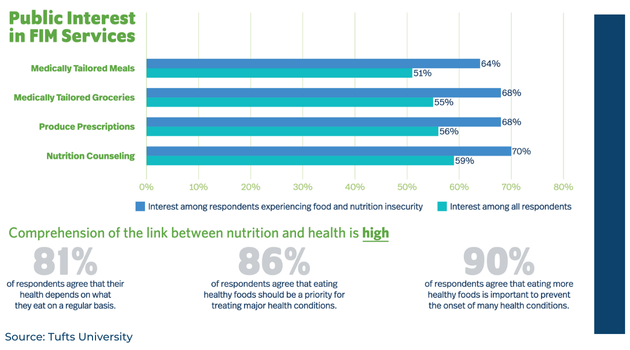 A
survey of U.S. adults by The Food is Medicine Institute at Tufts University, a leading organization in the field, found widespread agreement that diet-related medical conditions are a top health concern for U.S. adults.55 Additionally, survey respondents expressed high interest in Food is Medicine services like medically tailored meals and nutrition counseling. This interest was greater for people experiencing food and nutrition insecurity. Another poll from The Rockefeller
Foundation showed that although four in five U.S. adults across demographics, income levels, party affiliations and regions support integrating Food is Medicine programs into U.S. health care, there was low awareness of where to find or access these
services.
56
A
survey of U.S. adults by The Food is Medicine Institute at Tufts University, a leading organization in the field, found widespread agreement that diet-related medical conditions are a top health concern for U.S. adults.55 Additionally, survey respondents expressed high interest in Food is Medicine services like medically tailored meals and nutrition counseling. This interest was greater for people experiencing food and nutrition insecurity. Another poll from The Rockefeller
Foundation showed that although four in five U.S. adults across demographics, income levels, party affiliations and regions support integrating Food is Medicine programs into U.S. health care, there was low awareness of where to find or access these
services.
56
Momentum for Nutrition Education for Health Professionals
The focus on food for health extends to training health and allied professionals to provide education and patient support for healthy eating. In August 2025, the U.S Department of Health and Human Services and the U.S. Department of Education announced an initiative urging leading medical education organizations to implement comprehensive nutrition education and training. Efforts include adding nutrition education to medical training and continuing education.57 The Academy of Nutrition and Dietetics, the professional organization representing U.S. registered dietitian nutritionists, joined 14 other medical organizations in voicing support for the inclusion of nutrition education as a core component of medical training. 58
 In
addition, leading nutrition organizations voiced support for recommending Food Is Medicine interventions for patients using GLP-1 medications for obesity.11 The expansion of Food Is Medicine programs and nutrition education could include
innovative programs in both clinical and community settings. Culinary medicine, which combines evidence-based nutrition, cooking instruction and clinical care, is a practical extension of the Food Is Medicine movement.59 Currently, more than 55 medical schools, residency programs and nursing schools are using a culinary medicine curriculum called Health meets Food.60 Culinary teaching extends to a growing number of hospitals,
where patients can learn to create healthy recipes. Among hospitals with these programs are the Yale School of Medicine, Boston Medical Center and Veterans Affairs facilities throughout the country.61,62,
63
In
addition, leading nutrition organizations voiced support for recommending Food Is Medicine interventions for patients using GLP-1 medications for obesity.11 The expansion of Food Is Medicine programs and nutrition education could include
innovative programs in both clinical and community settings. Culinary medicine, which combines evidence-based nutrition, cooking instruction and clinical care, is a practical extension of the Food Is Medicine movement.59 Currently, more than 55 medical schools, residency programs and nursing schools are using a culinary medicine curriculum called Health meets Food.60 Culinary teaching extends to a growing number of hospitals,
where patients can learn to create healthy recipes. Among hospitals with these programs are the Yale School of Medicine, Boston Medical Center and Veterans Affairs facilities throughout the country.61,62,
63
Implications for Education and Health Professionals
Precision Nutrition
Artificial intelligence is being adopted across the food and nutrition landscape, from manufacturing to health care applications. Ongoing developments in AI are making personalized nutrition increasingly precise, tailoring guidance to individual biology, preferences and lifestyle.64,65
 Whole-Milk Comeback
 Dairy foods like yogurt, butter and cheese are experiencing record growth. Beyond taste, affordability and versatility, consumers increasingly choose dairy to meet diverse health and wellness goals. Whole-milk dairy foods are receiving renewed attention as science continues to evolve our understanding of dietary fats. A growing body of evidence shows that whole-milk dairy is not linked to adverse health outcomes, and credible research demonstrates its neutral to positive health benefits.66 The verdict is finally in: Whole dairy foods, when consumed at recommended intakes, fit within healthy, balanced eating patterns.
This evolving perspective reflects a broader shift in nutrition science from evaluating single nutrients to examining whole foods and dietary patterns. Central to this shift is the concept of the dairy matrix, which is characterized by the complex interaction of nutrients, bioactive compounds, and unique physical structure that shapes digestion, absorption, and physiological effects of consuming dairy foods.67 This unique matrix helps to explain why dairy foods have benefits despite saturated fat, sodium, or sugar content. Common processing techniques like fermentation, heat treatment and aging further modify the dairy matrix, creating a diverse array of desirable and nutritious dairy foods like cheese and yogurt.
Dietary guidance, policy and regulations are also moving towards the acceptance of whole fat dairy. The U.S. Food and Drug Administration recently approved the first-ever qualified health claim for yogurt, regardless of sugar or fat content, recognizing a potential link between its regular consumption and a reduced risk of type-2 diabetes.68 The federal administration has also acknowledged the evidence on whole fat dairy’s health benefits indicating a potential shift in the Dietary Guidelines for Americans, expected to be released in early 2026. Finally, bipartisan support from Congress led to the passage of the Whole Milk for Healthy Kids Act, providing schools with the option of serving whole and 2% milk, in addition to the current low-fat and fat-free options offered.69
Consumer demands, scientific evidence and dietary recommendations are coming together to underscore dairy’s evolving and important role in health promoting diets.
References
1. 119th Congress. HR 1: an act to provide for reconciliation pursuant to title II of H. Con. Res. 14. Congress.gov website. Published 2025. Accessed December 11, 2025. https://www.congress.gov/bill/119th-congress/house-bill/1/text
2. Cooney E. Budget cuts knock down a ‘pillar of public health,’ ending nutrition education. STAT website. Published July 30, 2025. Accessed December 11, 2025. https://www.statnews.com/2025/07/30/budget-cuts-end-snap-public-health-education-program-for-food-stamp-beneficiaries
3. CalFresh Healthy Living. Creating a healthier California. Published 2025. Accessed December 11, 2025. https://calfresh.dss.ca.gov/Portals/41/Documents/StatePlans/Budgets/ffy24-calfresh-healthyliving-by-the-numbers.pdf
4. Baker J. USDA’s decision to end 30-year food security report will hide the struggle of millions of families to put food on the table [press release]. Food Research & Action Center website. Published September 22, 2025. Accessed December 11, 2025. https://frac.org/news/foodsecuritysurveyterminationsept25
5. Cone A. USDA ends $1 billion for schools, food banks to buy food from local suppliers. United Press International website. Published March 13, 2025. Accessed December 11, 2025. https://www.upi.com/Top_News/US/2025/03/13/Agriculture-funding-costs-schools-food-banks/3101741835236/
6. The White House. Strategy Report: Make Our Children Healthy Again. Published September 2025. Accessed December 11, 2025. https://www.whitehouse.gov/wp-content/uploads/2025/09/The-MAHA-Strategy-WH.pdf
7. Reed L, Johnson J, Lott M, Story M. The Current State of Knowledge on SNAP Restrictions and Disincentives. Healthy Eating Research website. Published September 2025. Accessed December 11, 2025. https://healthyeatingresearch.org/wp-content/uploads/2025/09/HER-SNAP-Waivers-Brief.pdf
8. Harnack LJ, Oakes JM, Elbel B, et al. Effects of inclusion of food purchase restrictions and incentives in a food benefit program on diet quality and food purchasing: results from a randomized trial. J Acad Nutr Diet. 2024;124(5):569-582. doi: 10.1016/j.jand.2023.11.024
9. International Food Information Council. Americans’ Perceptions of Protein. Published July 2025. Accessed December 11, 2025. https://ific.org/wp-content/uploads/2025/07/IFIC-Spotlight-Survey-Protein-Perceptions.pdf
10. Harris E. Poll: roughly 12% of US adults have used a GLP-1 drug, even if unaffordable. JAMA. 2024;332(1):8. doi:10.1001/jama.2024.10333
11. Mozaffarian D, Agarwal M, Aggarwal M, et al. Nutritional priorities to support GLP-1 therapy for obesity: a joint advisory from the American College of Lifestyle Medicine, the American Society for Nutrition, the Obesity Medicine Association, and The Obesity Society. Obesity (Silver Spring). 2025;33(8):1475-1503. doi:10.1002/oby.24336
12. Copeland J. New survey reveals what parents seek in kids’ snacks. SupplySide Food & Beverage Journal website. Published May 8, 2025. Accessed December 11, 2025. https://www.supplysidefbj.com/snacks/new-survey-reveals-what-parents-seek-in-kids-snacks
13. Cargill. The Protein Profile: The 2025 Primer for Protein Trends and Tips. Cargill website. Published 2025. Accessed December 11, 2025. https://www.cargill.com/doc/1432277049818/the-2025-protein-profile.pdf
14. C.S. Mott Children’s Hospital. Mott Poll report: teens and protein. C.S. Mott Children’s Hospital National Poll on Children’s Health website. Published October 21, 2024. Accessed December 11, 2025. https://mottpoll.org/reports/teens-and-protein
15. Baker R. Protein has become America’s latest obsession. Companies like General Mills and PepsiCo are capitalizing on it. CNBC website. Published July 22, 2025. Accessed December 11, 2025. https://www.cnbc.com/2025/07/22/protein-craze-general-mills-pepsico-kraft-heinz.html
16. Adam D. Protein packs a punch in 2024 New Pacesetters ranking. Supermarket News website. Published June 23, 2025. Accessed December 11, 2025. https://www.supermarketnews.com/cpg/protein-packs-a-punch-in-2024-new-pacesetters-ranking
17. Eastlake D. High-protein craze continues but can industry keep up? Food Navigator website. Published May 2, 2025. Accessed December 11, 2025. https://www.foodnavigator.com/Article/2025/05/02/high-protein-demand-straining-food-and-beverage-industry
18. Southey F. 5 ingredients powering the high-protein craze. Food Navigator website. Published June 2, 2025. Accessed December 11, 2025. https://www.foodnavigator.com/Article/2025/06/02/which-functional-proteins-are-used-in-food-and-drink
19. Smith B. Upcoming US dairy expansion investments total $11B. Dairy Processing website. Published October 2, 2025. Accessed December 11, 2025. https://www.dairyprocessing.com/articles/3610-upcoming-us-dairy-expansion-investments-total-11b
20. DiNapoli J. Danone targets consumers taking weight loss drugs with new drink. Reuters website. Updated August 11, 2025. Accessed December 11, 2025. https://www.reuters.com/business/healthcare-pharmaceuticals/danone-targets-consumers-taking-weight-loss-drugs-with-new-drink-2025-08-11
21. Lifeway Foods, Inc. Lifeway Foods relaunches Basics Plus line of kefir and colostrum shots, reviving a functional food innovation 30 years ahead of its time. PR Newswire website. Published August 22, 2025. Accessed December 11, 2025. https://www.prnewswire.com/news-releases/lifeway-foods-relaunches-basics-plus-line-of-kefir-and-colostrum-shots-reviving-a-functional-food-innovation-30-years-ahead-of-its-time-302536750.html
22. Putch K. Protein quality a crucial differentiator for dairy. Dairy Processing website. Published September 25, 2025. Accessed December 11, 2025. https://www.dairyprocessing.com/articles/3592-protein-quality-a-crucial-differentiator-for-dairy
23. Mulet-Cabero AI, Torres-Gonzalez M, Geurts J, et al. The dairy matrix: its importance, definition, and current application in the context of nutrition and health. Nutrients. 2024;16(17):2908. doi: 10.3390/nu16172908
24. Louie JCY. Are all ultra-processed foods bad? A critical review of the NOVA classification system. Proc Nutr Soc. 2025:1-9. doi:10.1017/S0029665125100645
25. Savaiano DA, Hutkins RW. Yogurt, cultured fermented milk, and health: a systematic review. Nutr Rev. 2021;79(5):599-614. doi:10.1093/nutrit/nuaa013
26. Williams AM, Couch CA, Emmerich SD, Ogburn DF. Ultra-processed food consumption in youth and adults: United States, August 2021-August 2023. Data Brief No. 536. National Center for Health Statistics website. Published August 2025. Accessed December 11, 2025. https://www.cdc.gov/nchs/products/databriefs/db536.htm#Key_finding
27. McGrosky A, Luke A, Arab L. Energy expenditure and obesity across the economic spectrum. Proc Natl Acad Sci. 2025:122(29):e2420902122. doi:10.1073/pnas.2420902122
28. Mottis G, Kandasamey P, Peleg-Raibstein D. The consequences of ultra-processed foods on brain development during prenatal, adolescent and adult stages. Front Pub Health. 2025;13. doi:10.3389/fpubh.2025.1590083
29. International Food Information Council. 2025 IFIC Food & Health Survey: a focus on food & ingredient safety. Published July 28, 2025. Accessed December 11, 2025. https://ific.org/research/2025-food-health-survey
30. World Health Organization Newsroom. Call for experts to develop a WHO guideline on consumption of ultra-processed foods. World Health Organization website. Published May 15, 2025. Accessed December 11, 2025. https://www.who.int/news-room/articles-detail/call-for-experts-to-develop-a-who-guideline-on-consumption-of-ultra-processed-foods
31. US Food and Drug Administration. Ultra-processed foods. USDA website. Updated September 18, 2025. Accessed December 11, 2025. https://www.fda.gov/food/nutrition-food-labeling-and-critical-foods/ultra-processed-foods
32. Levy S, Hainley L. Cutting through the noise on food additive actions. Global Food IQ website. Published May 21, 2025. Accessed December 11, 2025. https://globalfoodiq.com/cutting-through-the-noise-on-food-additive-actions
33. Governor Newsom signs first-in-the-nation law to ban ultra-processed foods from school lunches. Governor Gavin Newsom website. Published October 8, 2025. Accessed December 11, 2025. https://www.gov.ca.gov/2025/10/08/governor-newsom-signs-first-in-the-nation-law-to-ban-ultra-processed-foods-from-school-lunches
34. AB-1264 Pupil nutrition: restricted school foods and ultraprocessed foods of concern: prohibition. California Legislative Information website. Accessed December 11, 2025. https://leginfo.legislature.ca.gov/faces/billNavClient.xhtml?bill_id=202520260AB1264
35. International Dairy Foods Association. Healthy dairy in schools commitment. IDFA website. Accessed December 11, 2025. https://www.idfa.org/healthydairyinschools
36. Zimmerman S. US ice cream makers commit to artificial dye phase-out by 2028. Food Dive website. Published July 15, 2025. Accessed December 11, 2025. https://www.fooddive.com/news/us-ice-cream-makers-commit-to-artificial-dye-phase-out-by-2028/753065
37. Zimmerman S. More food companies are reformulating amid push to remove artificial ingredients. Food Dive website. Published May 15, 2025. Accessed December 11, 2025. https://www.fooddive.com/news/food-ingredients-reformulation-rfk-artificial-dyes/748274
38. Forrest CB, Koenigsberg LJ, Eddy Harvey F, Maltenfort MG, Halfon N. Trends in US children’s mortality, chronic conditions, obesity, functional status, and symptoms. JAMA. 2025;334(6):509-516. doi:10.1001/jama.2025.9855
39. Centers for Disease Control and Prevention. Spotlight on diabetes data: prediabetes in US adolescents. CDC website. Accessed December 11, 2025. https://gis.cdc.gov/grasp/diabetes/diabetesatlas-spotlight.html
40. Munte E, Zhang X, Khurana A, Hartmann P. Prevalence of extremely severe obesity and metabolic dysfunction among US children and adolescents. JAMA Netw Open. 2025;8(7):e2521170. doi: 10.1001/jamanetworkopen.2025.21170
41. Liu M, Inoue K, Boyd A, Aggarwal R, Marinacci LX, Wadhera RK. Obesity prevalence among children and adolescents in the United States, 2011 to 2023. Ann Intern Med. 2025;178(10):1517-1520. doi: 10.7326/ANNALS-25-00389
42. UNICEF. Feeding profit. UNICEF website. Accessed December 11, 2025. https://www.unicef.org/reports/feeding-profit
43. Weitzman C, Guevara J, Curtin M, et al. Promoting optimal development: screening for mental health, emotional, and behavioral problems: clinical report. Pediatrics. 2025;156(3):e2025073172. doi: 10.1542/peds.2025-073172
44. Yaman NE, Haberlin-Pittz K, McKinney BM, et al. Evolving trends in GLP-1 receptor agonist prescriptions for pediatric type 2 diabetes—A retrospective analysis (2019-2024). Poster 1158-P presented at ADA 85th Scientific Sessions; June 20-23, 2025; Chicago, IL.
45. Meara K. GLP-1 use increased significantly among pediatric patients with T2D in past 5 years | ADA 2025. Drug Topics website. Published June 25, 2025. Accessed December 11, 2025. https://www.drugtopics.com/view/glp-1-use-increased-significantly-among-pediatric-patients-with-t2d-in-past-5-years-ada-2025
46. Nowosielski B. Obesity medication use remains low among children | ADA 2025. Drug Topics website. Published June 25, 2025. Accessed December 11, 2025. https://www.drugtopics.com/view/obesity-medication-use-remains-low-among-children
47. Berkeley Food Institute. California farm to school program exceeds climate and market access goals, reaches vast majority of counties. Berkeley Food Institute website. Published September 16, 2025. Accessed December 11, 2025. https://food.berkeley.edu/bfi-news/2025-farm-to-school-pr
48. Literacy for Life Grants. California Foundation for Agriculture in the Classroom website. Accessed December 11, 2025. https://learnaboutag.org/grants/literacy-for-life
49. Roberts H. The Power of Peers: A Curriculum for Training Students to Provide Peer-to-Peer Support in Schools. California School-Based Health Alliance website. Published 2025. Accessed December 11, 2025. https://www.schoolhealthcenters.org/wp-content/uploads/2025/08/The-Power-of-Peers-P2P-Curriculum.pdf
50. Dairy Foods. Danone expands support of FoodCorps and the American Heart Association. Published September 4, 2025. Accessed December 11, 2025. https://www.dairyfoods.com/articles/98485-danone-expands-support-of-foodcorps-and-the-american-heart-association
51. Dimopoulou M, Antoniadou M, Amargianitakis M, Gortzi O, Androutsos O, Varzakas T. Nutritional factors associated with dental caries across the lifespan: a review. Appl Sci. 2023;13(24):13254. doi:10.3390/app132413254
52. Office of Disease Prevention and Health Promotion. Food Is Medicine: a project to unify and advance collective action. ODPHP website. Accessed December 11, 2025. https://odphp.health.gov/our-work/nutrition-physical-activity/food-medicine
53. Office of Disease Prevention and Health Promotion. About this initiative. ODPHP website. Accessed December 11, 2025. https://odphp.health.gov/foodismedicine/about-initiative
54. Seligman HK, Angell SY, Berkowitz SA, et al. A systematic review of “Food Is Medicine” randomized controlled trials for noncommunicable disease in the United States: a scientific statement from the American Heart Association. Circulation. 2025;152(4). doi:10.1161/CIR.0000000000001343
55. Food is Medicine Institute. Public perceptions of Food is Medicine in the United States. Tufts Food is Medicine website. Published June 26, 2025. Accessed December 11, 2025. https://tuftsfoodismedicine.org/wp-content/uploads/2025/06/Public-Perceptions-of-Food-is-Medicine-in-the-United-States-fact-sheet_June-2025-1.pdf
56. The Rockefeller Foundation. Rockefeller Foundation releases new polling data: majority of Americans want Food is Medicine programs [press release]. Published June 12, 2025. Accessed December 11, 2025. https://www.rockefellerfoundation.org/news/rockefeller-foundation-releases-new-polling-data-majority-americans-want-food-is-medicine-programs
57. Secretaries Kennedy, McMahon demand comprehensive nutrition education reforms [press release]. US Department of Health and Human Services website. Published August 27, 2025. Accessed December 11, 2025. https://www.hhs.gov/press-room/hhs-education-nutrition-medical-training-reforms.html
58. Academy of Nutrition and Dietetics. Leading health organizations call for nutrition education to become a core part of medical training [press release]. Academy of Nutrition and Dietetics website. Published September 9, 2025. Accessed December 11, 2025. https://www.eatrightpro.org/about-us/for-media/press-releases/leading-health-organizations-call-for-nutrition-education-to-become-a-core-part-of-medical-training
59. Albin J, Wong W, Siler M, Bowen ME, Kitzman H. A novel culinary medicine service line: practical strategy for Food as Medicine. NEJM Catal Innov Care Deliv. 2025;6(9). doi:10.1056/CAT.24.0347
60. Health meets Food. Partner medical schools. The American College of Culinary Medicine website. Accessed December 11, 2025. https://culinarymedicine.org/culinary-medicine-partner-school
61. The Teaching Kitchen. Boston Medical Center website. Accessed December 11, 2025. https://www.bmc.org/nourishing-our-community/teaching-kitchen
62. Nutrition and food services. US Department of Veterans Affairs website. Accessed December 11, 2025. https://www.nutrition.va.gov/Healthy_Teaching_Kitchen.asp
63. General Internal Medicine. Culinary medicine. Yale School of Medicine website. Accessed December 11, 2025. https://medicine.yale.edu/internal-medicine/genmed/education/culinary-medicine
64. Agrawal K, Goktas P, Kumar N, Leung M. Artificial intelligence in personalized nutrition and food manufacturing: a comprehensive review of methods, applications, and future directions. Front Nutr. 2025;12:1636980. doi: 10.3389/fnut.2025.1636980
65. Wu X, Oniani D, Shao Z, et al. A scoping review of artificial intelligence for precision nutrition. Adv Nutr. 2025;16(4):100398. doi:10.1016/j.advnut.2025.100398
66. Taormina VM, Unger AL, Kraft J. Full-fat dairy products and cardiometabolic health outcomes: Does the dairy-fat matrix matter? Front Nutr. 2024;11. doi:10.3389/fnut.2024.1386257
67. Mulet-Cabero AI, Torres-Gonzalez M, Geurts J, et al. The dairy matrix: its importance, definition, and current application in the context of nutrition and health. Nutrients. 2024;16(17):2908. doi:10.3390/nu16172908
68. U.S. Food & Drug Administration. FDA announces qualified health claim for yogurt and reduced risk of type 2 diabetes. FDA website. Published March 1, 2024. Accessed December 11, 2025. https://www.fda.gov/food/hfp-constituent-updates/fda-announces-qualified-health-claim-yogurt-and-reduced-risk-type-2-diabetes
69. 119th Congress. S 222 – Whole Milk for Healthy Kids Act of 2025. Congress.gov website. Published 2025. Accessed December 11, 2025. https://www.congress.gov/bill/119th-congress/senate-bill/222
Read previous issues of Trends related to food and nutrition.