
Older adults have unique nutritional needs that support optimal health and enhance quality of life during aging.
 Chronic
Disease
1
Chronic
Disease
1 Older
adults have unique nutritional needs that support optimal health and enhance quality of life for healthy aging.
Older
adults have unique nutritional needs that support optimal health and enhance quality of life for healthy aging.
 Bone + Muscle
 Older
adults are at greater risk for health conditions related to bone and muscle mass loss, including osteoporosis and sarcopenia.
Older
adults are at greater risk for health conditions related to bone and muscle mass loss, including osteoporosis and sarcopenia.
 Cognition
 Researchers
are uncovering how a healthy diet can help preserve cognitive function.
Researchers
are uncovering how a healthy diet can help preserve cognitive function.

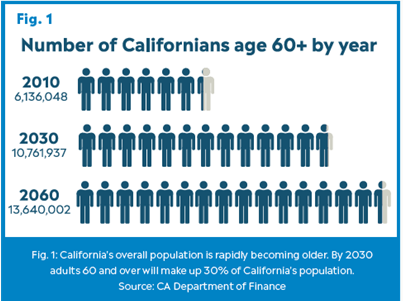 Nutrition Security
One in 5 food-insecure households include an adult 65 years or older.10 Poverty, food insecurity and poor nutrition have harmful impacts on the health and well-being of older adults.
Access to nutrient-rich dairy foods can help older adults achieve nutrition security, supporting their ability to work, carry on daily activities and live
independently.
 Prioritize
Nutrition for Older Adults
Prioritize
Nutrition for Older Adults Adequate
milk and dairy intake can be a simple, safe and affordable solution to support health as people age. Health professionals, community resource centers, Area Agencies on Aging, the Supplemental Nutrition Assistance Program(SNAP), Meals on Wheels and
food banks can advocate for milk and dairy foods’ role in meal programs that support older adult nutrition.
Adequate
milk and dairy intake can be a simple, safe and affordable solution to support health as people age. Health professionals, community resource centers, Area Agencies on Aging, the Supplemental Nutrition Assistance Program(SNAP), Meals on Wheels and
food banks can advocate for milk and dairy foods’ role in meal programs that support older adult nutrition.
 Tips
for adding daily dairy for Older Adults
Tips
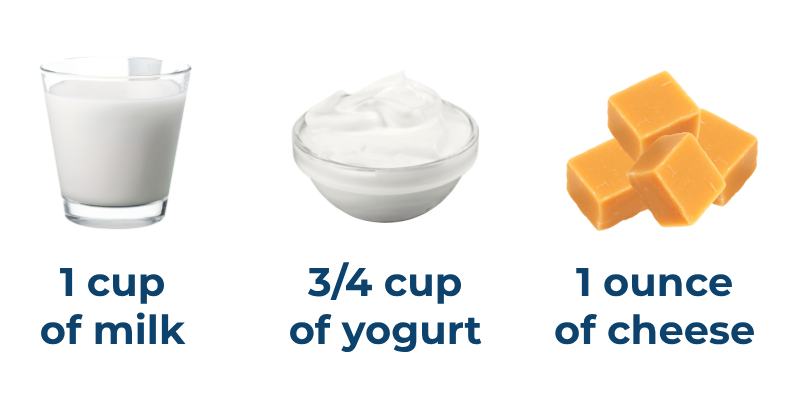
for adding daily dairy for Older AdultsAdding just 1 additional daily serving of dairy foods to current consumption can help older adults move closer to meeting daily dairy needs and significantly contribute to closing gaps in key nutrients of concern.
Daily dairy recommendation for older adults is 3 servings.11

Nourish the body, stay active and support lifelong health.

Dairy foods offer a unique package of nutrients that work together to provide multiple health benefits for children and teens.