
Nutrition during pregnancy and early childhood lays the foundation for optimal health, cognitive abilities, motor skills and social and emotional development.1 Consistent access to nutritious foods like milk and dairy foods greatly influences brain, 2 bone and immune health,3 ensuring proper growth and development. Healthy eating can have far-reaching impacts on children’s ability to succeed in school and life, as well as likelihood of developing diet-related chronic diseases.
 Brain
Brain

 Bone
Bone
During periods of rapid growth in early childhood, skeletal size and density increase. Early childhood is a crucial time to get bonebuilding nutrients like calcium, potassium and phosphorus found in dairy foods.7



 Milk
+ Water Are the Go-to Beverages Recommended by Leading Health Authorities13
Milk
+ Water Are the Go-to Beverages Recommended by Leading Health Authorities13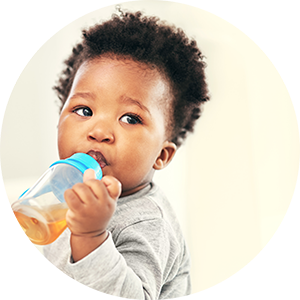
| 1 to 2 years old | 2 to 3 servings |
| 2 to 3 years old | 2 servings |
| 3 to 5 years old | 2.5 servings |
 Access
to Nutritious Foods Supports Thriving Communities
Access
to Nutritious Foods Supports Thriving Communities The
Special Supplemental Nutrition Program for Women, Infants, and Children (WIC) and Child and Adult Care Food Program (CACFP) support maternal and child health by providing nutrition education and nutritious supplemental foods, including milk and
dairy foods. The WIC public health program has been proven to:14
The
Special Supplemental Nutrition Program for Women, Infants, and Children (WIC) and Child and Adult Care Food Program (CACFP) support maternal and child health by providing nutrition education and nutritious supplemental foods, including milk and
dairy foods. The WIC public health program has been proven to:14
References
1. The First 1000 Days: Nourishing America’s Future. 1000 Days. 2016. Accessed November 30, 2023. https://thousanddays.org/wp-content/uploads/1000Days-NourishingAmericasFuture-Report-FINAL-WEBVERSION-SINGLES.pdf
2. Schwarzenberg SJ, Georgieff MK, Committee on Nutrition. Advocacy for improving nutrition in the first 1000 days to support childhood development and adult health. Pediatrics. 2018;141(2):e20173716. DOI:10.1542/peds.2017-3716
3. Robertson RC, Manges AR, Finlay BB, Prendergast AJ. The human microbiome and child growth: first 1000 days and beyond. Trends in Microbiol . 2019;27(2):131-147. DOI:10.1016/j.tim.2018.09.008
4. Bath SC. The effect of iodine deficiency during pregnancy on child development. Proc Nutr Soc. 2019;78(2):150-160. DOI:10.1017/s0029665118002835
5. Bougma K, Aboud FE, Harding KB, Marquis GS. Iodine and mental development of children 5 years old and under: a systematic review and meta-analysis. Nutrients. 2013;5(4):1384-1416. DOI:10.3390/nu5041384
6. Caudill MA, Strupp BJ, Muscalu L, Nevins JEH, Canfield RL. Maternal choline supplementation during the third trimester of pregnancy improves infant information processing speed: a randomized, double blind, controlled feeding study. FASEB J. 2018;32(4):2172-2180. DOI:10.1096/fj.201700692rr
7. Heaney RP. Dairy and bone health. J Am Coll Nutr. 2009;28(Suppl1):82S-90S. DOI:10.1080/07315724.2009.10719808
8. Calder PC. Optimal nutritional status for a well-functioning immune system is an important factor to protect against viral infections. Nutrients. 2020;12(4). DOI: 10.3390/nu12041181
9. Daly JM, et al. Effect of dietary protein and amino acids on immune function. Crit Care Med, 1990.18(2 Suppl):S86-93.
10. Leeuwendaal NK, Stanton C, O’Toole PW, Beresford TP. Fermented Foods, Health and the Gut Microbiome. Nutrients. 2022;14(7):1527. DOI:10.3390/nu14071527
11. Centers for Disease Control and Prevention. When, what and how to introduce solid foods. Updated June 27, 2023. Accessed November 30, 2023. https://www.cdc.gov/nutrition/infantandtoddlernutrition/foods-and-drinks/when-to-introduce-solid-foods.html
12. US Department of Agriculture and US Department of Health and Human Services. Dietary Guidelines for Americans, 2020-2025. 9th ed. 2020. Accessed November, 30 2023. https://www.dietaryguidelines.gov/resources/2020-2025-dietary-guidelines-online-materials
13. Lott M, Callahan E, Welker Duffy E, Story M, Daniels S. Consensus statement. Healthy beverage consumption in early childhood: recommendations from key national health and nutrition organizations. Healthy Eating Research. Published September 2019. Accessed November 30, 2023. https://healthyeatingresearch.org/research/consensus-statement-healthy-beverage-consumption-in-early-childhood-recommendations-from-key-national-health-and-nutrition-organizations
14. WIC: building a healthy foundation. Food and Nutrition Service, US Department of Agriculture. Updated February 16, 2023. Accessed November 30, 2023. https://www.fns.usda.gov/wic/building-healthy-foundation
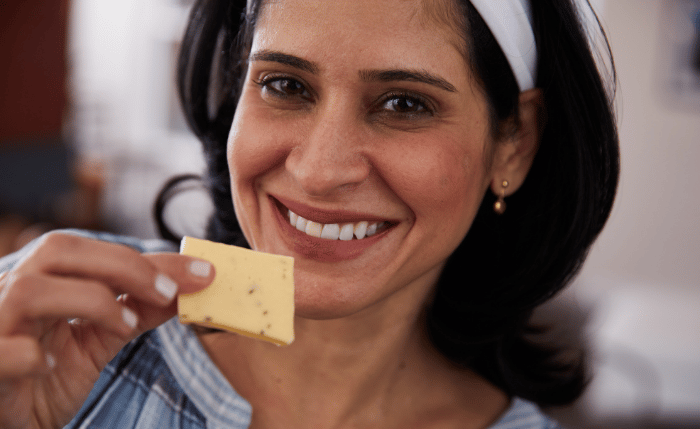
Nourish the body, stay active and support lifelong health.

Older adults have unique nutritional needs that support optimal health and enhance quality of life during aging.