In this month’s Nutrition Connections for Health Professionals:
In January 2026, the U.S. Department of Health and Human Services and the U.S. Department of Agriculture released the 2025–2030 Dietary Guidelines for Americans, along with a new supporting website. These guidelines provide the foundation for federal
food, nutrition and health policies and help guide state and local public health initiatives. 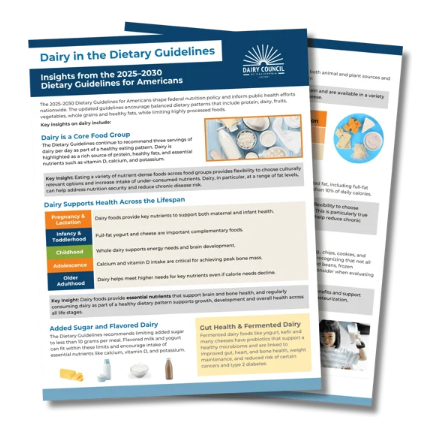 The updated Dietary Guidelines emphasize overall dietary
patterns, encouraging a balanced approach that includes protein foods, dairy, fruits, vegetables, healthy fats and whole grains, while limiting highly processed foods.
The updated Dietary Guidelines emphasize overall dietary
patterns, encouraging a balanced approach that includes protein foods, dairy, fruits, vegetables, healthy fats and whole grains, while limiting highly processed foods.
For key dairy takeaways from the Dietary Guidelines, click the
topics below to jump to what interests you most:
Download the Dairy in the Dietary Guidelines summary handout here.
.png?sfvrsn=c29d2d10_1) Research Spotlight
Research SpotlightResearch from JMIR Research Protocols shows that self-monitoring such as tracking physical activity and dietary intake is the “active ingredient” linked to sustained behavior change.
Health professionals can apply
this concept by encouraging patients to track the foods they eat at each meal, with a focus on including nutrient-dense options. Examples of simple goals to help meet nutrient needs might be “include fruits and vegetables at every meal”
or “aim for three servings of dairy a day.”
Use Dairy Council of CA’s Dairy Supports Healthy Aging handout,
which aligns with a food-for-health approach, to encourage self-monitoring and goal setting for improved health outcomes.
Dairy Council of CA is partnering with the California Academy of Physician Associates by contributing nutrition articles to CAPA Quarterly magazine.
The April issue focuses on identifying barriers to healthy eating and
offers strategies to manage lactose intolerance when it is a real or perceived barrier.
Read the article, which includes practical tips: Empowering Patients Through Nutrition: Strategies for Discussing Lactose Intolerance.
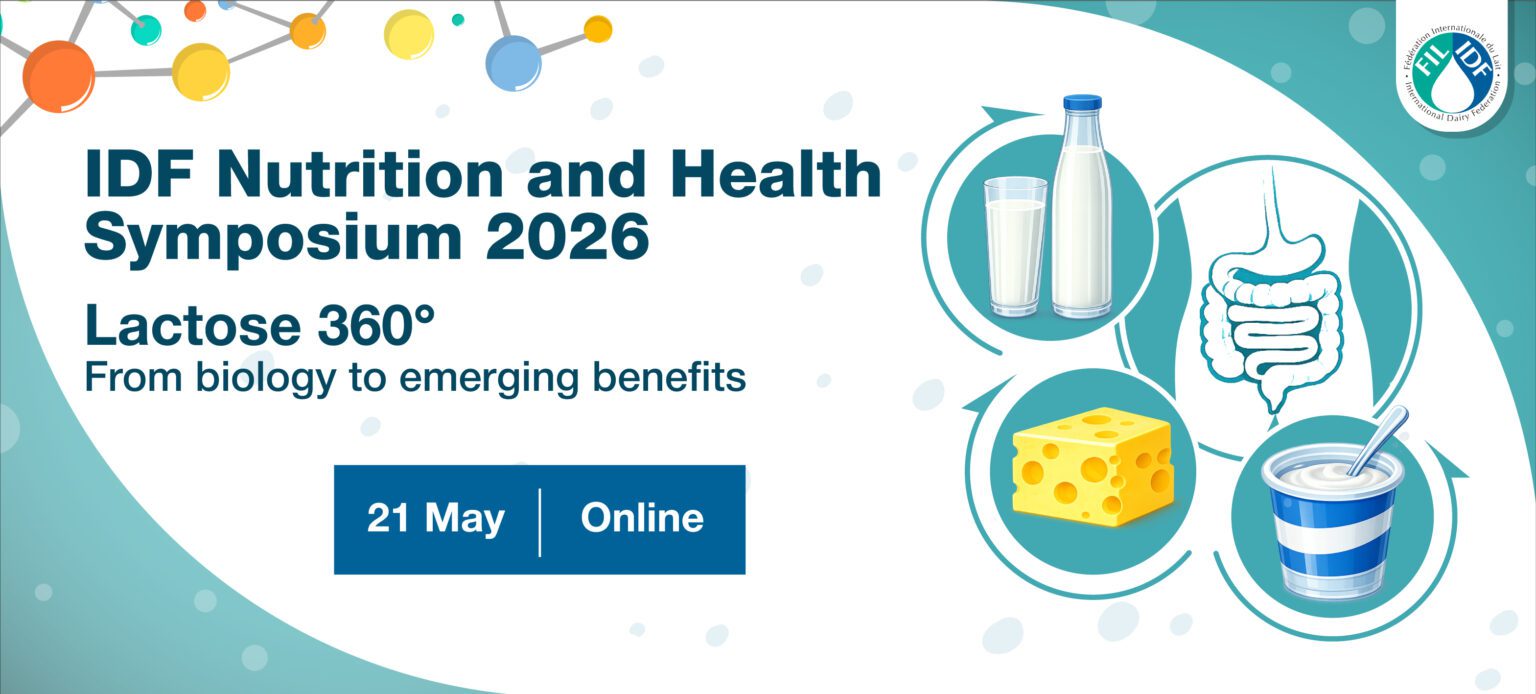
Lactose continues to create confusion among consumers and health professionals, often leading to unnecessary dietary restrictions. International Dairy Federation is hosting “Lactose 360,” a pre-recorded presentation and live panel discussion
on May 21, 2026, from 7 a.m. to 9 a.m. PDT.
The symposium, designed for nutrition and health professionals, will cover physiology, clinical practice, emerging research and practical guidance. Hear from international experts and gain
evidence-based insights to inform nutrition and health recommendations. Register here.
 Questions or opportunities for collaboration? Please contact Bessie O’Connor,
Registered Dietitian Nutritionist at boconnor@dairycouncilofca.org.
Questions or opportunities for collaboration? Please contact Bessie O’Connor,
Registered Dietitian Nutritionist at boconnor@dairycouncilofca.org.
Share & Subscribe
If you find this newsletter valuable,
please consider sharing it with colleagues, partners or students who may benefit from nutrition insights and practical resources.
Subscribe here.