Last month, I joined dairy leaders at the California Creamery Operators Association (CCOA) 126th Annual Meeting at Lake Tahoe, which provided opportunities to network, engage and share insights. During the conference, I presented on the evolving food and nutrition policy landscape, highlighting key developments shaping our industry, including Make America Healthy Again (MAHA), the Dietary Guidelines for Americans, ultra-processed foods, SNAP and other emerging federal regulations. I was joined by Katie Davey from the Dairy Institute of California, who discussed pertinent state policy issues impacting the dairy sector.
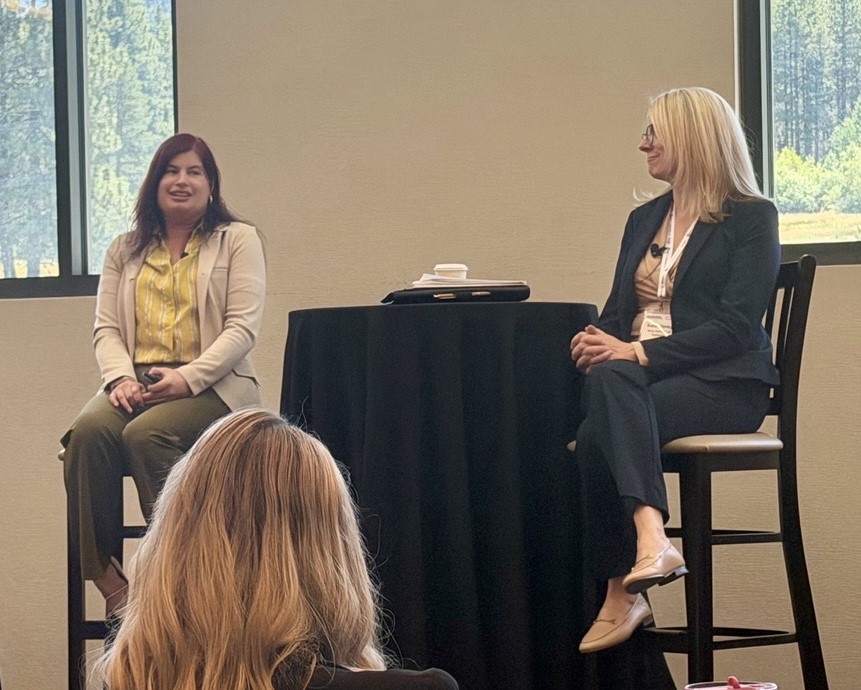
I also participated in the panel discussion titled The Dairy Product Landscape, alongside leaders from Clover Sonoma, Hilmar Cheese Company and the California Dairy Innovation Center. Our conversation explored shifting consumer expectations, the growing demand for high-quality protein, the renewed interest in whole-fat dairy foods, product innovation, consumer trust and the importance of collaboration across the dairy value chain.
A common theme across the meeting was that dairy is uniquely positioned to meet today's consumer priorities for nutrition, transparency, innovation and value. As policy discussions and consumer preferences continue to evolve, our industry's commitment to science, collaboration and education will remain critical to sustaining dairy's positive role in health and well-being.
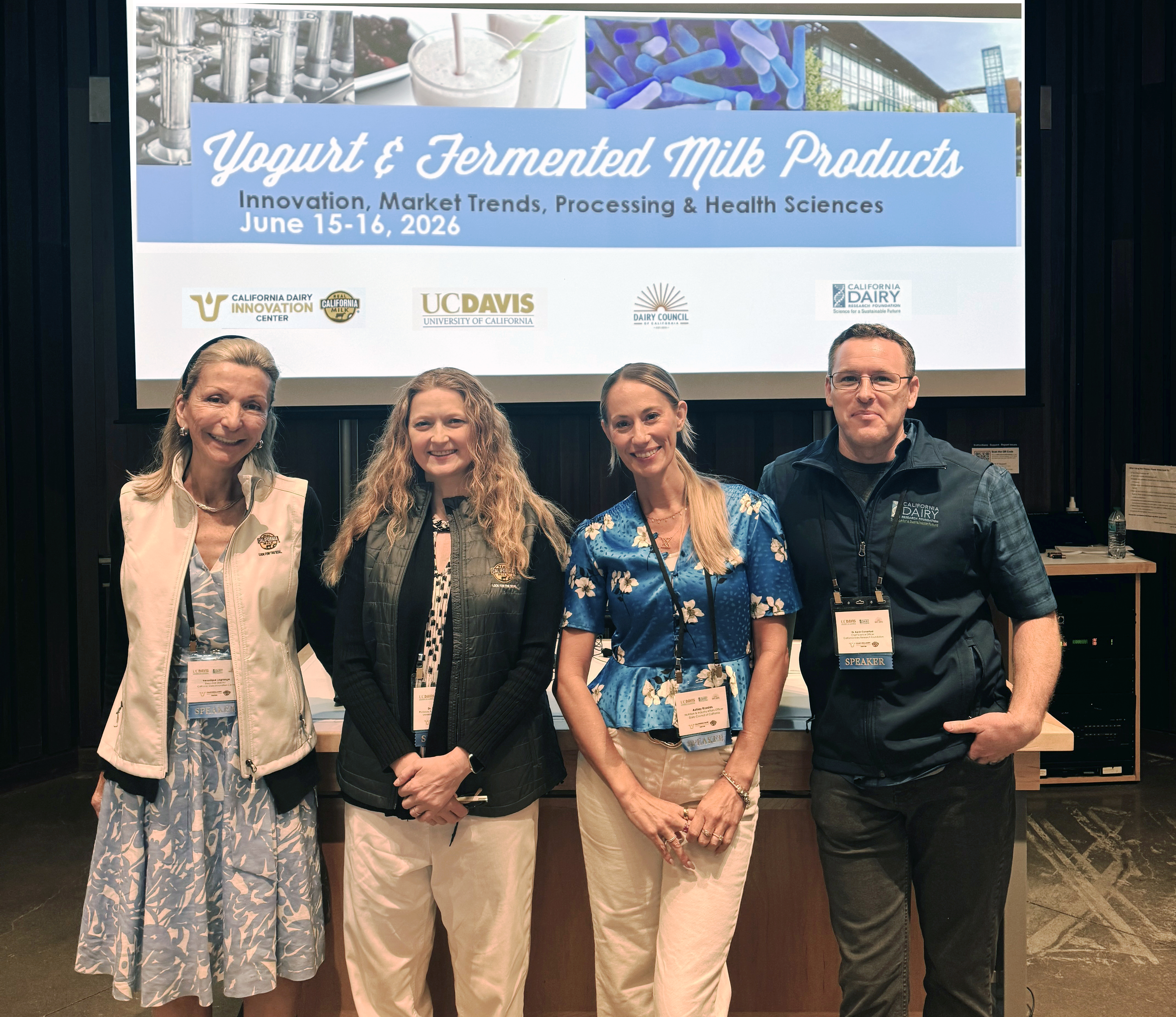
Here are highlights from other June industry events in which Dairy Council of California participated:
In this newsletter, you will find pertinent updates regarding state and federal regulations and links to new research and media articles.
The California Department of Food and Agriculture will begin accepting nominations on July 23, 2026, for upcoming Dairy Council of CA board positions. Several producer and handler board terms expire this year, and there is currently one vacant producer seat and one vacant handler seat. Self-nominations are due by August 6, 2026. Dairy producers and handlers interested in contributing to Dairy Council of CA’s mission and future direction are encouraged to participate in the nomination process.
Gov. Gavin Newsom has signed SB 172, securing permanent funding for California’s nationally recognized Farm to School Program. The measure ensures continued support for serving students meals made with California-grown foods while strengthening local food systems, supporting farmers and expanding nutrition and agricultural education opportunities in schools.
California is celebrating a major milestone with nearly 3.5 billion free school meals served since the state became the first in the nation to provide universal school meals to students in 2022. The Newsom Administration highlighted that the program now serves nearly 1 billion meals annually, helping reduce hunger, support student health and academic success, and ease costs for families. Milk and dairy foods are an integral part of school meals, and this milestone honors the dairy community’s commitment to improving child nutrition and food access statewide.
ACR 212 (Macedo), would proclaim June to be Dairy Month in California, recognizing dairy as California’s top agricultural commodity and celebrating the role of dairy farmers and processors in supporting food security and nutrition, leading environmental stewardship and strengthening local communities and the economy. Dairy Council of CA will monitor this bill and keep the industry informed of its progress.
Rep. Glenn Thompson (R-PA) introduced the FRESH Act (H.R. 9164) on June 4, 2026, which would establish U.S. Department of Agriculture (USDA) grants to help schools acquire and install milk storage equipment. The legislation aims to improve student access to milk in elementary and secondary schools by supporting infrastructure investments that enhance school meal service and dairy availability.
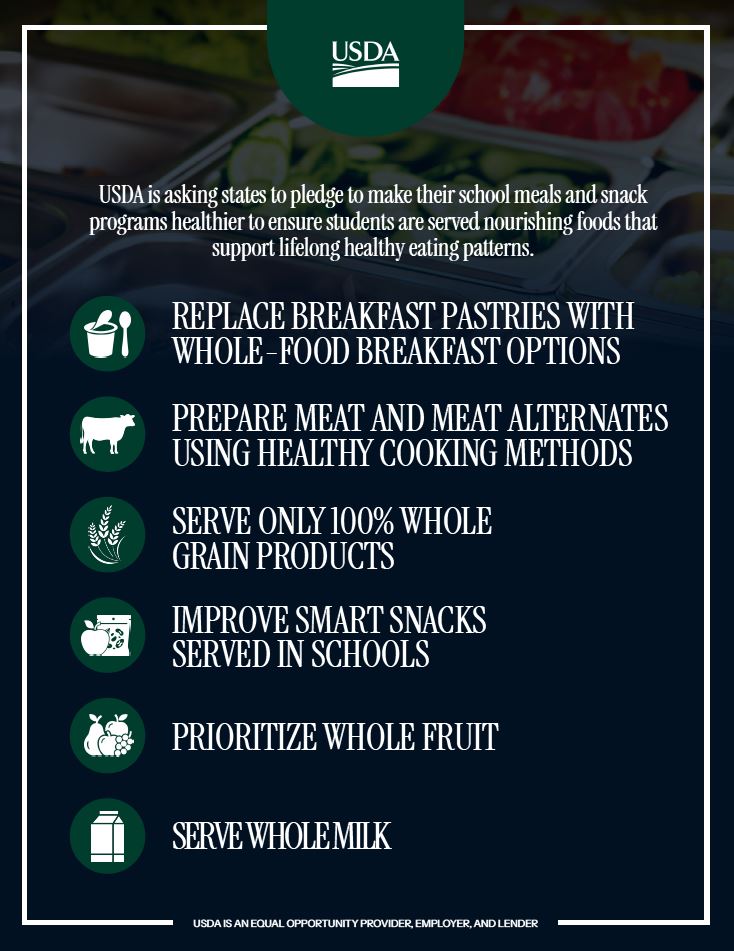
USDA has introduced a voluntary state-level Pledge for Healthier School Meals that encourages states to strengthen school nutrition standards while the agency develops updated federal school meal regulations expected later this year.
The pledge includes several dairy-friendly provisions such as promoting yogurt (particularly lower-added-sugar options) as a whole-food breakfast alternative, recognizing cheese sticks as a recommended Smart Snack and encouraging schools to offer whole milk under recent federal policy changes.
While the initiative also emphasizes reducing added sugars, artificial ingredients and highly processed foods, it signals continued support for dairy’s role in school meals and suggests that upcoming USDA school nutrition standards could include additional opportunities for dairy products.
The Food and Drug Administration is amending its regulations for the use of salt substitutes in standardized foods where salt is a required or optional ingredient, including certain cheeses. The change is intended to give food manufacturers greater flexibility to reduce sodium levels while maintaining product standards, supporting broader public health goals to lower sodium consumption and improve dietary patterns. Originally initiated under the Biden Administration, the rule, which is expected to be released later this month, aims to help drive sodium reduction efforts across a range of standardized food products.
If you have questions, concerns or feedback you would like to share, please do not hesitate to reach out.
Best regards,
Amy DeLisio, CEO
Dairy Council of California
adelisio@DairyCouncilofCA.org